Station story
This station has documented 5 moth species from 5 observations. The dataset spans 2 moth sessions from 2026-07-13 through 2026-07-17. Double-banded Carpet Moth (Spargania magnoliata) is the strongest station-associated species by current share of network observations.
Week at the sheet
A recap of the most recently completed Monday-through-Sunday week at this station.
Last week (2026-08-24 to 2026-08-30) was quiet at this station -- no species-level observations recorded.
Recent observations
Latest synced observations from this station.
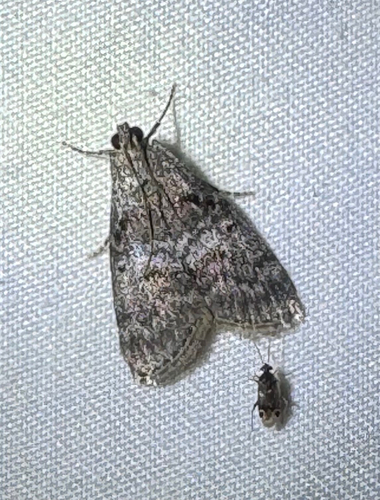
Predicted next 10 moths
The ten moth species not yet recorded at Second St with the strongest near-term seasonal evidence within 100 km. Nearby iNaturalist records from the next 14 calendar days set the order, with this week's records weighted slightly more than next week's. Species with at least four timed tracked records move behind the other candidates when half or fewer fall during sheet-compatible hours (6 p.m. to 10 a.m.). Host associations are shown as context but do not change the ranking. This is a watchlist for likely next new station records, not a guarantee for any one sheet night.
When
Showing 10 targets
-
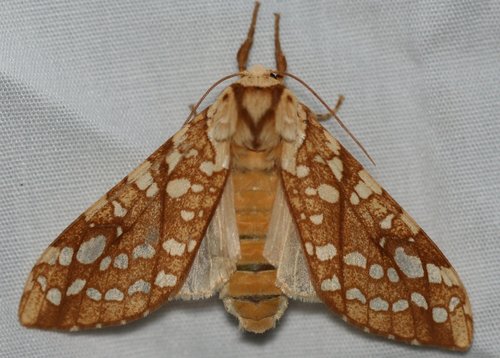 #1 Hickory Tussock Moth (Lophocampa caryae) Comparable across both weeks · This week 93 · next week 93 · 186 nearby iNaturalist records within 100 km · historical seasonal evidence Sheet-time evidence: 120 of 139 tracked records Host evidence: 1 exact shared host plant + 1 broader shared host genus · 2 station moths
 -
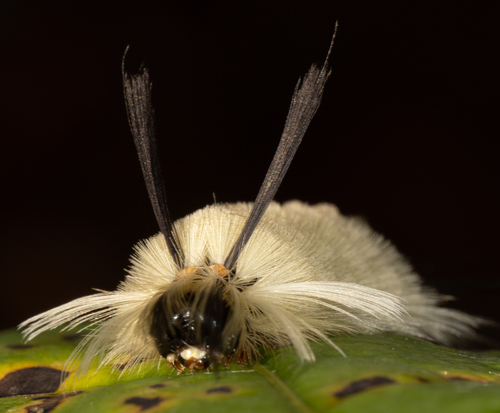 #2 Banded Tussock Moth (Halysidota tessellaris) Stronger next week · This week 71 · next week 73 · 144 nearby iNaturalist records within 100 km · historical seasonal evidence Sheet-time evidence: 43 of 50 tracked records Host evidence: 1 exact shared host plant + 1 broader shared host genus · 2 station moths
 -
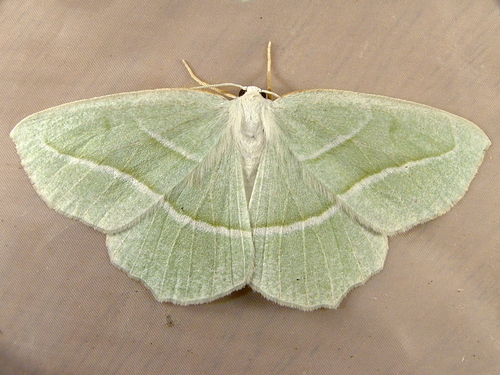 #3 Pale Beauty (Campaea perlata) Stronger this week · This week 65 · next week 39 · 104 nearby iNaturalist records within 100 km · historical seasonal evidence Sheet-time evidence: 117 of 123 tracked records Host evidence: 2 exact shared host plants + 1 broader shared host genus · 2 station moths
 -
 #4 Milkweed Tussock Moth (Euchaetes egle) Stronger this week · This week 52 · next week 43 · 95 nearby iNaturalist records within 100 km · historical seasonal evidence Sheet-time evidence: 25 of 31 tracked records
 -
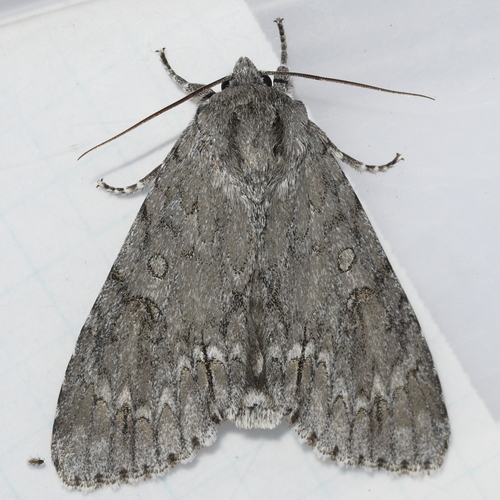 #5 American Dagger (Acronicta americana) Comparable across both weeks · This week 48 · next week 48 · 96 nearby iNaturalist records within 100 km · historical seasonal evidence Sheet-time evidence: 57 of 64 tracked records
 -
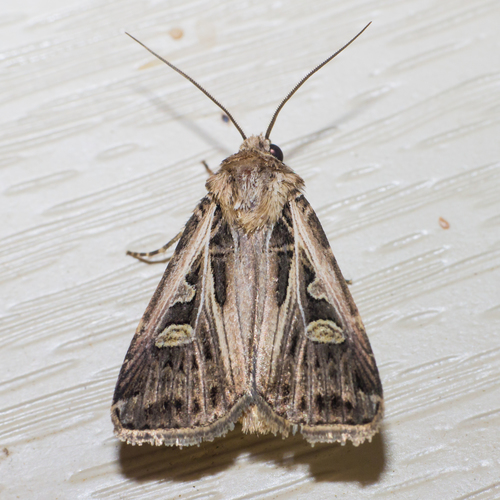 #6 Dingy Cutworm Moth (Feltia jaculifera) Stronger this week · This week 56 · next week 19 · 75 nearby iNaturalist records within 100 km · historical seasonal evidence Sheet-time evidence: 18 of 18 tracked records
 -
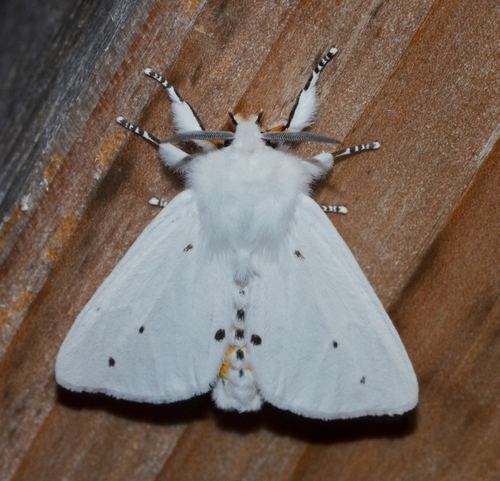 #7 Virginian Tiger Moth (Spilosoma virginica) Stronger next week · This week 30 · next week 49 · 79 nearby iNaturalist records within 100 km · historical seasonal evidence Sheet-time evidence: 49 of 50 tracked records Host evidence: 1 broader shared host genus · 2 station moths
 -
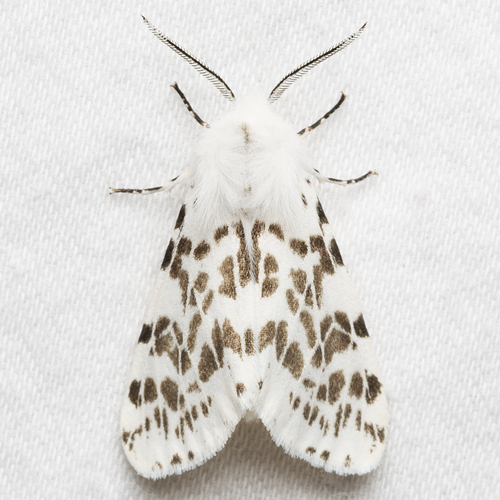 #8 Fall Webworm Moth (Hyphantria cunea) Stronger this week · This week 36 · next week 29 · 65 nearby iNaturalist records within 100 km · historical seasonal evidence Sheet-time evidence: 24 of 33 tracked records Host evidence: 2 exact shared host plants + 2 broader shared host genera · 2 station moths
 -
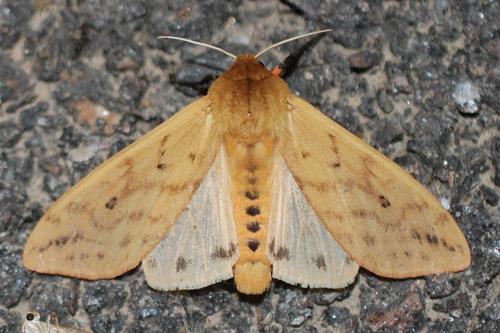 #9 Isabella Tiger Moth (Pyrrharctia isabella) Stronger next week · This week 20 · next week 35 · 55 nearby iNaturalist records within 100 km · historical seasonal evidence Sheet-time evidence: 106 of 113 tracked records Host evidence: 1 exact shared host plant · 2 station moths
 -
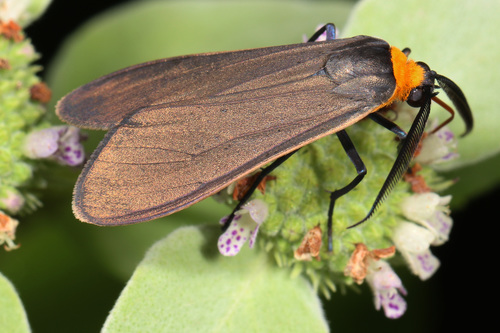 #10 Yellow-collared Scape Moth (Cisseps fulvicollis) Stronger this week · This week 26 · next week 20 · 46 nearby iNaturalist records within 100 km · historical seasonal evidence Sheet-time evidence: 53 of 58 tracked records
No targets match these filters.
Seasonal return watch
A visual field guide to species historically recorded here in the 30 calendar days after the latest synced session.
No next-flight suggestions are available from the current station history.
Signature species
Shared species that lean most strongly toward this station, based on its share of their network observations.
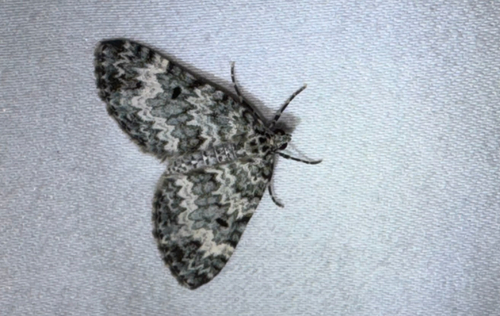
Double-banded Carpet Moth (Spargania magnoliata)
1 observations here · 12% of its network records
Recorded at 5 tracked stationsCarrot Seed Moth (Sitochroa palealis)
1 observations here · 2% of its network records
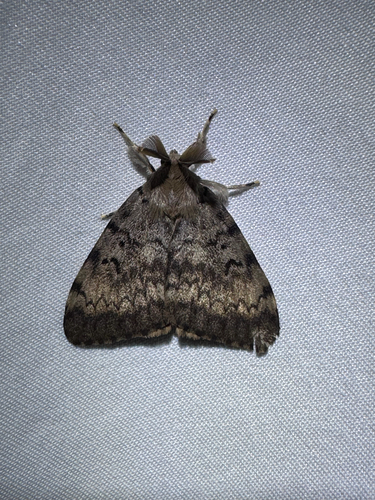
Recorded at 7 tracked stationsSpongy Moth (Lymantria dispar)
1 observations here · 1% of its network records
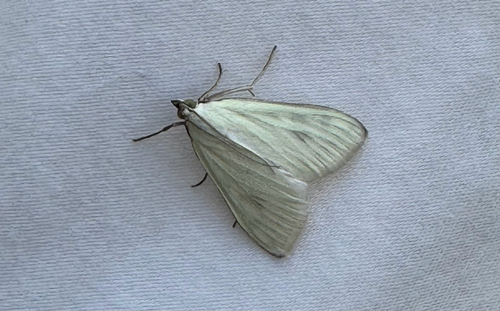
Recorded at 8 tracked stationsMaple Webworm Moth (Pococera asperatella)
1 observations here · 1% of its network records
Recorded at 7 tracked stationsDistinctive records
State, county, or network firsts recorded here, plus anything with fewer than 10 tracked network records overall.
1
firsts or network-rare species recorded here
0 unique network-wide · 1 with 2-10 tracked network records
Uniques
The only tracked record of this species anywhere in the network.None in the current dataset.
2-10 network records
Rare across the whole network, or a state/county/network first, and worth a second look.- Double-banded Carpet Moth (Spargania magnoliata) 8 tracked network records · 1 observations here · last 2026-07-17
Habitat summary
Recent documented host associations, with a separate full archive and specificity-weighted companion suggestions.
5 of 5 species confirmed at this station have documented host plants (0 not yet matched).
Most recently recorded matches are shown here.
- Spongy Moth (Lymantria dispar)
Ulmus americana (Ulmaceae)
- Maple Webworm Moth (Pococera asperatella)
Ulmus americana (Ulmaceae); Quercus (Fagaceae); Populus tremuloides (Salicaceae); Fagus grandifolia (Fagaceae); Acer (Aceraceae)
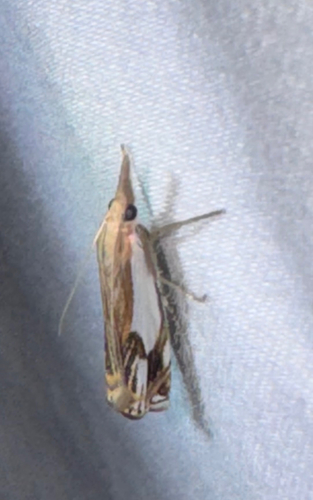
- Double-banded Grass-veneer (Crambus agitatellus)
Gramineae
- Double-banded Carpet Moth (Spargania magnoliata)
Pelargonium (Geraniaceae); Oenothera biennis (Onagraceae); Oenothera (Onagraceae); Geranium (Geraniaceae); Fuchsia (Onagraceae)
- Carrot Seed Moth (Sitochroa palealis)
Foeniculum (Umbelliferae); Daucus carota (Umbelliferae); Umbelliferae; Peucedanum (Umbelliferae); Ferula (Umbelliferae)
Browse all documented host associations (5)
About this data
Host-plant records come from HOSTS: a Database of the World's Lepidopteran Hostplants (Natural History Museum, London), a CC0-licensed archive from the Natural History Museum, London. It has not been updated since 2023, so it reflects historical literature rather than necessarily current or local usage -- some matches are only known at the genus level, not the exact species, and some confirmed species here have no HOSTS record at all. All Lepidoptera (moth) species reported in New York State on iNaturalist (place_id=48, excluding butterflies), not just species tracked by this project's stations. Retrieved 2026-07-21.
Seen at other tracked stations
- White-spotted Pug Moth (Eupithecia tripunctaria)shares Peucedanum with Carrot Seed Moth (Sitochroa palealis)
- Nessus Sphinx (Amphion floridensis)shares Fuchsia, Oenothera, Epilobium with Double-banded Carpet Moth (Spargania magnoliata), Maple Webworm Moth (Pococera asperatella)
- Corn Earworm Moth (Helicoverpa zea)shares Pelargonium with Double-banded Carpet Moth (Spargania magnoliata)
- Small Phoenix (Ecliptopera silaceata)shares Fuchsia, Epilobium with Double-banded Carpet Moth (Spargania magnoliata)
- Celery Looper Moth (Anagrapha falcifera)shares Daucus with Carrot Seed Moth (Sitochroa palealis)
- Purple Carrot-seed Moth (Depressaria depressana)shares Daucus with Carrot Seed Moth (Sitochroa palealis)
- Pearly Wood-nymph (Eudryas unio)shares Oenothera, Epilobium with Double-banded Carpet Moth (Spargania magnoliata)
- Bilobed Looper Moth (Megalographa biloba)shares Geranium with Double-banded Carpet Moth (Spargania magnoliata)
Reported elsewhere in New York, not yet tracked
- Darker-spotted Straw Moth (Heliothis phloxiphaga)shares Pelargonium with Double-banded Carpet Moth (Spargania magnoliata)
- White-lined Sphinx (Hyles lineata)shares Fuchsia, Oenothera with Double-banded Carpet Moth (Spargania magnoliata)
- Common Swift Moth (Korscheltellus lupulina)shares Daucus with Carrot Seed Moth (Sitochroa palealis)
- Banded Sphinx (Eumorpha fasciatus)shares Fuchsia with Double-banded Carpet Moth (Spargania magnoliata)
- Geranium Plume Moth (Amblyptilia pica)shares Geranium with Double-banded Carpet Moth (Spargania magnoliata)
- Glassy Cutworm Moth (Apamea devastator)shares Geranium with Double-banded Carpet Moth (Spargania magnoliata)
- Circumscript Mompha (Mompha circumscriptella)shares Oenothera with Double-banded Carpet Moth (Spargania magnoliata)
- Mompha argentimaculellashares Oenothera with Double-banded Carpet Moth (Spargania magnoliata)
Sampling context
Automatically derived from species-level iNaturalist timestamps. These records show active moth nights and upload timing, not trap duration or light setup.
- species-recorded nights
- 2 2026-07-13 to 2026-07-17
- calendar years covered
- 1 2026
- median upload lag
- 13h 38m 5 timestamped records
2026
2 nights 5 species
Seasonal richness
Unique moth species by month across all synced years. Each row also shows how many active moth nights contributed to that month.
Phenology calendar
Weekly unique moth species across all synced years. Each cell includes active moth-night coverage for that week.
Jan 1
0 nights
Jan 8
0 nights
Jan 15
0 nights
Jan 22
0 nights
Jan 29
0 nights
Feb 5
0 nights
Feb 12
0 nights
Feb 19
0 nights
Feb 26
0 nights
Mar 4
0 nights
Mar 11
0 nights
Mar 18
0 nights
Mar 25
0 nights
Apr 1
0 nights
Apr 8
0 nights
Apr 15
0 nights
Apr 22
0 nights
Apr 29
0 nights
May 6
0 nights
May 13
0 nights
May 20
0 nights
May 27
0 nights
Jun 3
0 nights
Jun 10
0 nights
Jun 17
0 nights
Jun 24
0 nights
Jul 1
0 nights
1
Jul 8
1 nights
4
Jul 15
1 nights
Jul 22
0 nights
Jul 29
0 nights
Aug 5
0 nights
Aug 12
0 nights
Aug 19
0 nights
Aug 26
0 nights
Sep 2
0 nights
Sep 9
0 nights
Sep 16
0 nights
Sep 23
0 nights
Sep 30
0 nights
Oct 7
0 nights
Oct 14
0 nights
Oct 21
0 nights
Oct 28
0 nights
Nov 4
0 nights
Nov 11
0 nights
Nov 18
0 nights
Nov 25
0 nights
Dec 2
0 nights
Dec 9
0 nights
Dec 16
0 nights
Dec 23
0 nights
Species accumulation
Running species list, with active moth-night coverage in each chart point.